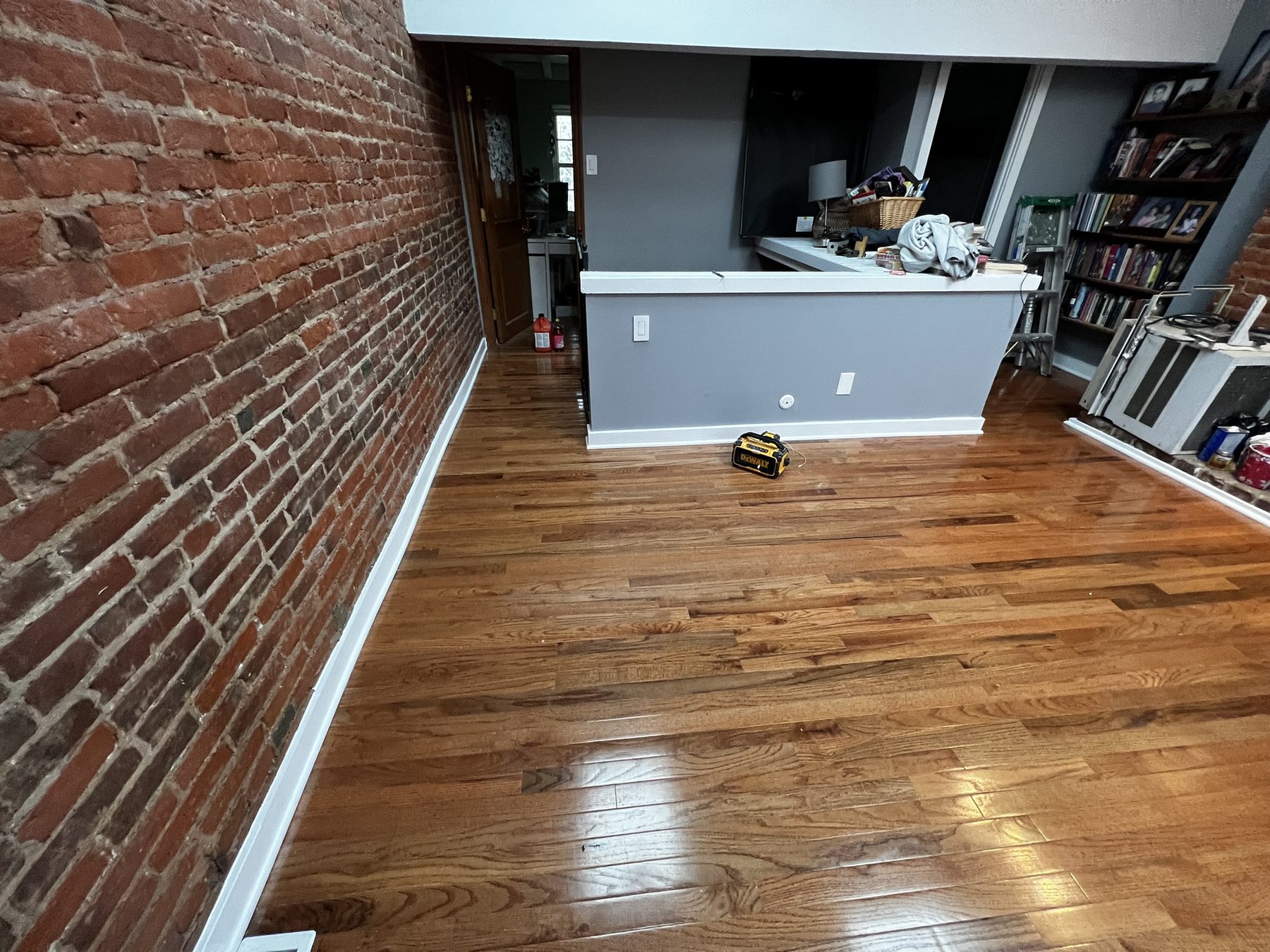
The flooring question is one of the most common ones we get from Philadelphia homeowners: "Hardwood or luxury vinyl plank?" Both can look stunning, both have improved enormously over the last decade, and both can be the right call depending on the room, the household, and the budget. Here is a side-by-side breakdown grounded in what actually performs in Philadelphia homes.
Hardwood Flooring at a Glance
Solid and engineered hardwood remain the premium choice for living areas, dining rooms, and bedrooms in older Philadelphia homes — especially row homes where the original floors are part of the character.
Pros:
- Adds significant resale value, especially in row homes built before 1950
- Can be refinished multiple times over its 50+ year lifespan
- Warm, natural look that ages beautifully
- Wide range of species, stains, and plank widths
Cons:
- Sensitive to moisture — not ideal for basements, bathrooms, or laundry rooms
- Dents and scratches show easily under heavy traffic with pets and kids
- Higher upfront cost than LVP
- Requires acclimation time and careful installation in older homes with uneven subfloors
Luxury Vinyl Plank (LVP) at a Glance
LVP has become the workhorse flooring for kitchens, bathrooms, basements, and high-traffic family areas. Modern LVP is nothing like the cheap vinyl of the 90s — the top tiers have realistic embossed wood textures and 20+ year wear warranties.
Pros:
- Fully waterproof — perfect for Philadelphia basements that occasionally get damp
- Scratch and dent resistant — handles pets, kids, and rolling chairs
- Easier and faster to install (often floating, click-lock systems)
- Significantly less expensive than hardwood
- Comfortable underfoot, especially with a cork or foam underlayment
Cons:
- Cannot be refinished — if damaged, planks must be replaced
- Doesn't add the same resale value as real hardwood
- Lower-end LVP looks plastic; you have to invest in a quality product
- Can fade in direct sunlight over many years
Cost Comparison (Philadelphia Pricing, 2026)
Installed pricing varies by product tier, subfloor condition, and project size. These are typical ranges we see in Philadelphia and the surrounding counties:
- Engineered hardwood, installed: $8 to $14 per square foot
- Solid hardwood, installed: $10 to $18 per square foot
- Mid-tier LVP, installed: $4 to $7 per square foot
- High-end LVP (rigid core / SPC), installed: $6 to $10 per square foot
Older Philadelphia row homes often have uneven subfloors that need leveling before any flooring goes down. Build a $1 to $3 per square foot contingency for subfloor prep into your budget — even with LVP.
Which Rooms Suit Each Option?
Here is the room-by-room playbook we recommend to most clients:
- Living room and dining room: Hardwood, especially if you're restoring original floors
- Bedrooms: Hardwood for warmth and resale; LVP if budget is tight
- Kitchen: LVP — kitchens get wet, and water plus hardwood is a slow-motion disaster
- Bathrooms: LVP or tile; never hardwood
- Basements: LVP or tile — moisture and concrete substrates rule out hardwood
- Mudrooms and entryways: LVP or porcelain tile
The Verdict for Philadelphia Row Homes
For most Philadelphia row homes, the best strategy is a mixed approach: refinish or install hardwood in the first-floor living spaces and upstairs bedrooms, and use high-quality LVP in the kitchen, bathrooms, and basement. You get the warmth, character, and resale value of real wood in the rooms that show off — and the durability and waterproofing of LVP where it actually matters.
If you're planning a flooring project in Philadelphia and want to talk through options for your specific home, we're happy to come measure, look at the subfloor, and put together a real quote.