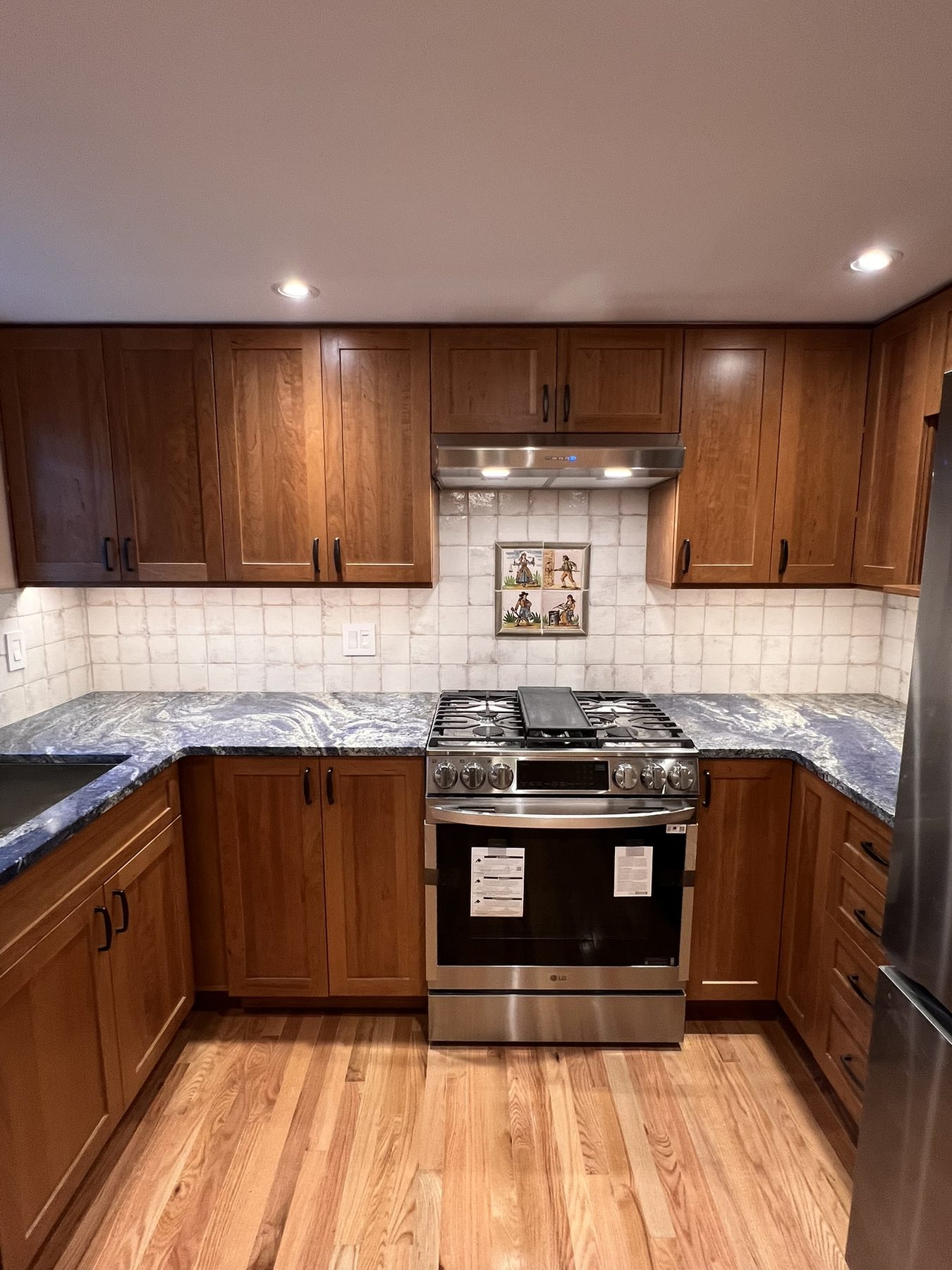
If you're thinking about renovating a Philadelphia home, one of the smartest questions to ask up front is: which projects will actually pay me back when I sell? Resale value isn't the only reason to renovate — quality of life matters too — but pairing what you want with what the market rewards makes every dollar work harder. After working on dozens of homes across the Philadelphia region, here are the five projects we consistently recommend for ROI.
1. Minor Kitchen Remodel
A "minor" kitchen remodel — keeping the existing footprint, refacing or replacing cabinet doors and hardware, upgrading countertops, adding a tile backsplash, and replacing appliances — is the single most reliable ROI project in the Philadelphia market. Industry studies consistently put the recoup rate around 70 to 80 percent.
A full gut renovation can be worth it for your own enjoyment, but the financial returns flatten as you spend past about $50,000 in most Philadelphia row homes. The smartest move is often to invest just enough to bring a tired kitchen up to current expectations.
2. Bathroom Update
Buyers walk through every bathroom and decide, in seconds, whether it feels updated or dated. A mid-range bathroom remodel — new vanity, refreshed tile, modern fixtures, better lighting, and refreshed paint — typically recovers 60 to 70 percent of its cost at resale.
The biggest wins:
- Replacing tub/shower combos with clean walk-in tile showers in primary bathrooms
- Swapping pedestal sinks for vanities with real storage
- Updating lighting to layered LED with dimmers
- Re-tiling floors and showers with neutral, contemporary materials
3. New Flooring
Few things change the feel of a home faster than fresh flooring. In Philadelphia row homes where the original hardwood is hidden under decades of carpet, refinishing existing hardwood is one of the highest-leverage moves you can make — often for a few thousand dollars per floor.
If the hardwood is gone or unsalvageable, installing new engineered hardwood in living areas and luxury vinyl plank in kitchens, baths, and basements gives you a cohesive, modern feel that appraisers and buyers respond to.
Local tip: Mixing too many flooring materials across one level can look choppy. Try to stick to one floor surface per level wherever the layout allows, with transitions only where rooms have a real functional reason to change.
4. Exterior Painting and Curb Appeal
Curb appeal is the first impression — and the cheapest renovation dollar you'll ever spend in terms of ROI. A fresh coat of exterior paint, new front door, updated house numbers, replaced light fixtures, and trimmed landscaping can transform a Philadelphia row home for a fraction of an interior remodel.
Specific high-impact moves:
- Paint the front door a bold accent color (deep navy, forest green, black, or cranberry)
- Replace cheap brass hardware with matte black or brushed nickel
- Add window boxes or a planted entryway
- Power-wash brick and walkways
5. Finished Basement
Many older Philadelphia homes have unfinished or partially finished basements that represent thousands of square feet of untapped value. Finishing a basement into a legitimate living space — proper egress, moisture control, insulated walls, finished ceilings, and quality flooring — typically returns 65 to 75 percent of its cost.
The keys to doing it right:
- Address moisture and waterproofing before any framing — never skip this step
- Use luxury vinyl plank or porcelain tile (never hardwood) for floors
- Plan ceiling height carefully; below 7 feet, the space won't appraise as livable square footage
- Pull permits — unpermitted finished basements often hurt resale rather than help
What Doesn't Pay Off
For the sake of balance, here are renovations that typically don't recover their cost in Philadelphia:
- Highly personalized luxury upgrades (wine cellars, home theaters, statement pools)
- Over-improving relative to the neighborhood
- Aggressive landscaping that requires constant upkeep
- Sunrooms and three-season additions in older homes without HVAC integration
How to Plan the Right Renovation
The best renovation strategy starts with two questions: How long do I plan to live here? and What does the neighborhood support? A great Philadelphia contractor will help you answer both before you commit a dollar.
If you'd like a free walk-through and an honest assessment of which projects make sense for your home and budget, we're glad to help.